Tuesday, August 7, 2012
Finished!!!!
Mrs. Lory, I believe I now have 50 terms, and 100 points. All of my terms are bolded, and there are multiple terms per picture, so sometimes they are hard to see. So glad to be done!!!! :)

Scavenger Hunt #7
.JPG)


Territorial Behavior-- Territorial behavior is when one animal believes that it has right to one specific territory and will guard that territory against other animals it does not approve of. Cats are notorious for this if they are outdoor cats. They will guard their backyard and have cat fights in the middle of the night fighting the cats who decided to walk onto their territory.


Monday, August 6, 2012
Scavenger Hunt #6
Sorry I have been so MIA.. I have had an extremely busy summer juggling summer work, 4-5 days of real work a week, and bouncing back and forth from Nicaragua, alaska, and california.
 Epithelial tissue-- This is one of my beautiful Nicaraguan babies I made friends with in June. Her name is Dayan, she is four years old, and I am in love with her sweet self. As every human is, she is covered head to toe in epithelial tissue, or in other words, "skin". Epithelial tissue is the lining of all internal and external parts of the body. The cells that make up this tissue are very closely packed together. Depending on the number of layers the tissue has, it can be divided into two types: simple (one layer) and stratified (two or more).
 Population-- These are the two families of girls that I became the most close with in Nicaragua. I hung out with them, went to the store with them and they bought me candy, and I went to their house and hung out with their parents and watched Big Momma's House in spanish. Population is a group of people or species inhabiting one area. They interbreed and live in the same place at the same time. This is part of the Nicaraguan population that lives in Nicaragua, and in the village of El Chunco.


Genetic variation within a population-- I went dog sledding in Alaska. The dogs that pulled us were all Alaskan huskies. However, there was a genetic variation between coloring of the alaskan husky's fur. Some has a a typical husky look to them with the black and grey back and a white belly, while others were solid white. Ironically, it seemed as if the white huskies were behaved better than the others, but that is most likely just a coincidence. :)
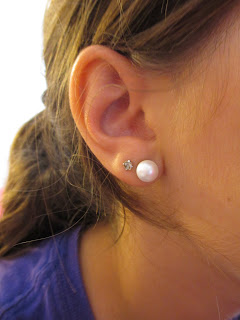 Connective Tissue-- Connective tissue binds together other tissues. It has cells scattered unlike epithelial tissue. It attaches epithelial tissues to other tissues.There are many types of connective tissue: loose connective, fibrous, elastic, collagenous, and specialized connective tissues. An example of a specialized is cartilage, which is found in humans ears, nose, and trachea.
 Glycogen-- Glycogen is how our body stores glucose. The liver produces it, while our muscle and fat cells store it. Eating carbohydrates is what forces more glycogen to be made, and it will be released when our blood glucose levels are low. Therefore, low carb diets hurt our glucose levels, by allowing it to not be stored because our body is not producing more glycogen to store it. South beach diet is a low carb diet. While some think it is a great weight loss diet, it actually is hurting your blood glucose levels.
 Endotherm-- This is a bald eagle in Kenai, Alaska. I was fishing and happened to look behind and up at a huge tree only to find a rare (in Ga) animal but not rare at all bird in Alaska: a bald eagle! They are warm blooded animals, just like all mammals. Therefore, they have the ability to make warmth using interior processes like shivering and increasing heart rate/metabolism. This makes them an endotherm.
Analogous Structures-- Analogous structures are structures of two or more different species that look similar and perform the same function but have evolved separately and at different times. The wings of birds and the wings of insects are an example of analogous structures.
Amniotic Egg-- Birds, mammals, and reptiles all lay amniotic eggs. They have yolks inside that nourish the organism that is developing inside the egg. The egg is used to protect the organism as it develops.


Genetic variation within a population-- I went dog sledding in Alaska. The dogs that pulled us were all Alaskan huskies. However, there was a genetic variation between coloring of the alaskan husky's fur. Some has a a typical husky look to them with the black and grey back and a white belly, while others were solid white. Ironically, it seemed as if the white huskies were behaved better than the others, but that is most likely just a coincidence. :)
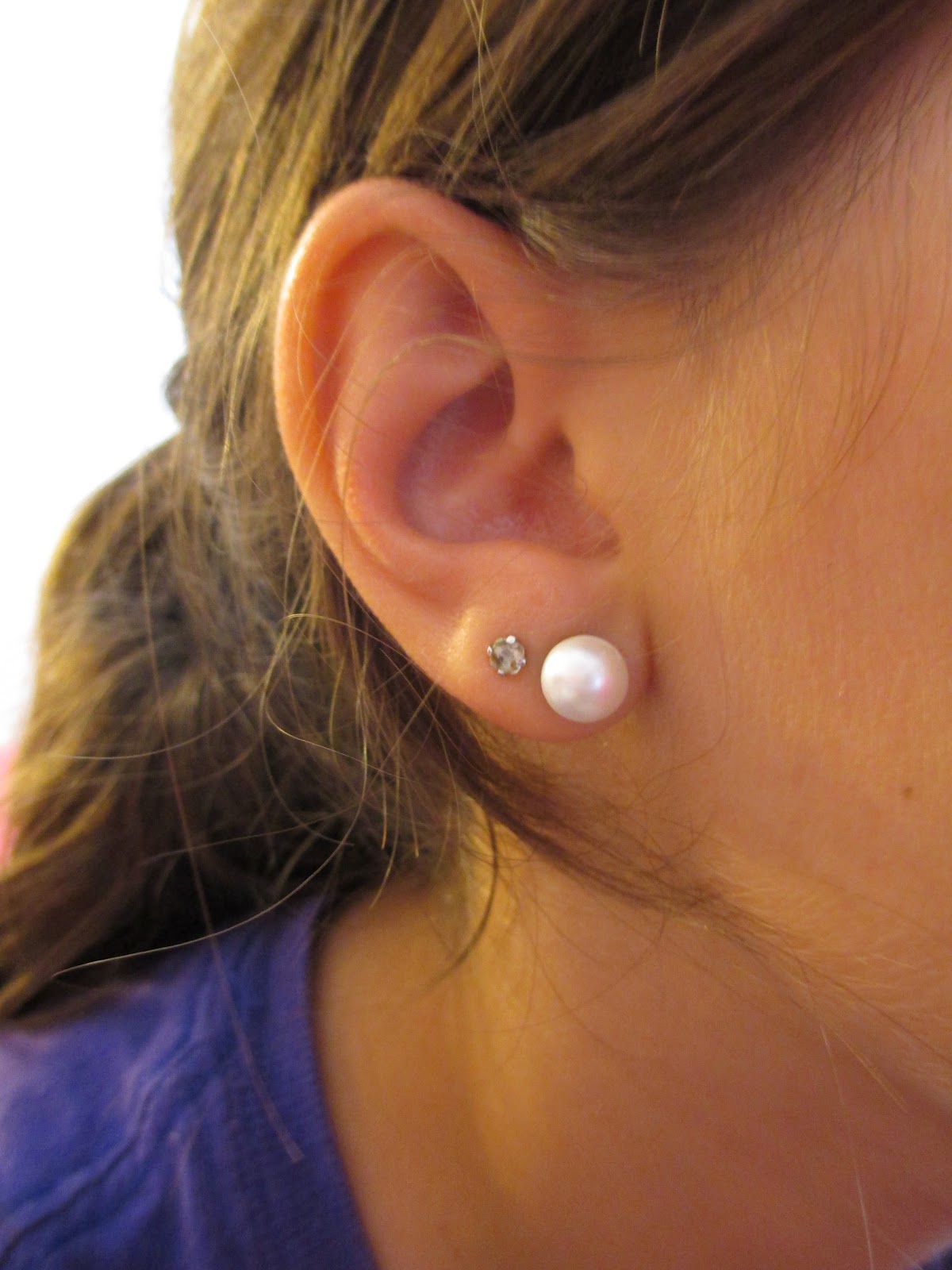


Analogous Structures-- Analogous structures are structures of two or more different species that look similar and perform the same function but have evolved separately and at different times. The wings of birds and the wings of insects are an example of analogous structures.
Amniotic Egg-- Birds, mammals, and reptiles all lay amniotic eggs. They have yolks inside that nourish the organism that is developing inside the egg. The egg is used to protect the organism as it develops.
Saturday, August 4, 2012
Summer Work/Posting Update
 (some of MY summer work)
It looks like Tyler and Kelly are "done". You both have enough points to take off this week, should you choose to do so. Well done! Amanda, Braeden, and Ansley are soooo close. David and Carrie... where are you??? Both of you had strong starts and seem to have dropped off. Only 12 days until class... whoo hoo! Don't forget to bring in your plants for some prizes :) Ms. P
Scavenger Hunt # 7- Ansley Dieckmann
.JPG)
.JPG)
This plum contains ethylene. Ethylene is a natural hormone in some fruits that help ripen the fruit.

My mom has blue eyes and my dad has green eyes. Blue eyes are the recessive gene because my sisters and I all have green eyes like my dad.
.JPG)
This lizard is an ectotherm. Ectotherms regulate their body temperature by exchanging heat with its surroundings. Endotherms are able to regulate their body temperature through metabolic processes unlike this ectotherm.
.JPG)
.JPG)
This is an example of homologous structures. My dogs paw and my foot are used for the same purpose and have similar structure.
Friday, August 3, 2012
scavenger hunt and book
 |
| This cactus uses the CAM plant process. It is an arid adaptation of the C3 and C4 plant processes. CO2 that enters the stomata during the night is then converted into organic acids which then in turn release CO2 in the day when the stomata is closed. Most CAM plants have to be found in dry and arid regions, which is why cacti are CAM plants. |
 |
| This plant and most everything else in the world uses cellular respiration. Cellular respiration is the process to convert biochemical energy from nutrients into ATP and with that it releases the waste products. They are catabolic reactions which breaks bigger molecules down into smaller molecules. It is also a redox reaction. |
 |
| All plants have auxins in them that are hormones of plants. Auxins play a key role in the growth of a plant. Also the life/plant cycle of a plant is affected by the auxins as well. Without auxins plants wouldn't be able to develop. |
 |
| The plant has a stalk called the filament. This filament is used to support the anther up. The anther is the key role in spreading the flower around in time of pollination. The anther has microsporangia that hold all the pollenating material. Any flowering plant has the anther but not all of them have the filament, only stalky plants that dangle need the filament. |
 |
| Adenosine triphosphate is a multifunctional nucleoside triphosphate used in cells as coenzymes . It transfers chemical energy within cells for its metabolism. It is one of the end processes of cellular respiration. One molecule of ATP has three proteins. ATP is used in all complex living organisms. ATP at the end breaks down into its basic version which makes it easily recyclable. On another note I finished the book and I found the last couple of pages to be quite alarming about all the different viruses that still threaten today's society and how it is soon to be that we will have another giant and international viral outbreak. I thought though that the last part was a little weird. But in the end it made sense, I really enjoyed the book so I will definitely read more books by the author who's name pervades me. |
Kelly - Scavenger Hunt #7
These pictures are from Moody Gardens on Galveston Island, Texas.

1.Homologous Structures
This is a picture of
a seal skeleton. The flippers of the seal and arms of humans are considered
homologous structures. They are used differently but they are supposed to be
from a common ancestor.


2. Mating Behavior
These are Potbelly Seahorses. The female is the larger and
brighter colored one, which helps to attract the male. Once they have found a
mate they are monogamous, which is very odd for fish. Seahorses mate during a
full moon. They begin with a courting process where they curl the ends of their
tales to each other and swim together. This can last for days. During courting the
male will open and close a pouch where the female will eventually deposit hundreds
of eggs. The male then fertilizes them and they grow for 2 to 5 weeks. The male
gives birth but he doesn’t take care of the baby seahorses, they are on their
own.

3. Asexual Reproduction
Organisms that reproduce asexually reproduce by
mitosis so their offspring are genetically identical to the parent. Some plants and animals can reproduce
asexually.
This picture is a sea star, sometimes called a
starfish. They belong to the phylum Echinodermata which means “spiny skin.” Sea
stars can be found in every ocean and they can live in both the intertidal zone
and in deep water.
There are male and female sea stars but they look the
same from the outside. Sea stars usually reproduce sexually but asexual
reproduction can also take place. If they reproduce asexually it is by
regeneration. If a sea star is split, it can re-grow another entire organism as
long as part of the central disk is left.

4. Littoral zone organism
The area where the sea and land meet is the littoral
zone, also called the intertidal zone. During high tide this area is covered by
water and at low tide it is open to the air. Some of these areas are muddy, some are sandy
and some are covered with rocks.
Crabs, sea stars, sea urchins, mussels and sea
anemones can be found in littoral zones. The organism in this picture is a sea
anemone. This one is about three inches across but some grow up to three feet.
They attach themselves to surfaces like rocks, coral or even a shell, but they
can move very slowly and sometimes they float in the water. They feed on
small fish and shrimp. Their mouth is at the top and is surrounded by tentacles
they use to sting their prey and move it into their mouth. If they are threatened they will pull their
tentacles in and form a ball.
Sea anemones and hermit crabs sometimes have a relationship
that benefits both (mutualism). The anemone attaches to the hermit crab’s shell
which allows the anemone to get a fresh supply of food. The crab benefits
because the anemone’s stinging tentacles protect it from predators.
And of course, there is also the relationship between Nemo
and an anemone! Clown fish live in anemones, safe from predators and they help
keep the anemone clean.

5. Homeostasis
Homeostasis is when an organism is able to keep its entire
internal systems stable even if their environment changes.
The penguins in this photo are King Penguins and Rockhopper
Penguins. The Rockhopper penguins are smaller and have the yellow feathers on
their head.
An example of homeostasis is an organism’s ability to keep
their body temperature stable. Penguins have adaptations that control their
heat loss by controlling the amount of warm blood that goes to different places
in their bodies, for example, their wings and feet. These parts are not well insulated
so they can have a large amount of heat loss. They will keep just enough blood flowing so
their feet and wings can’t freeze. Sometimes, if they are too warm, they will
also increase blood flow to their feet and wings to allow heat to escape.
Feathers also help penguins keep their temperatures stable. When sitting in a cold wind they will cover
their feet with their feathers and a layer of fat underneath the feathers. In
the cold they can puff their feathers out to trap air which acts as insulation.
If they are too hot they can puff their feathers even more and the warm air can
escape.
Another adaptation penguins have is called countercurrent
blood flow. They have an artery that carries the warm blood to their wings and
feet. Next to it are two veins that carry the cooler blood back to their heart.
When the cool blood flows next to the warmer artery it is able to absorb some
of the heat before it goes to the main body of the penguin. This keeps the core
of their body from cooling too much.
Subscribe to:
Comments (Atom)